Working waterfront / Columbia
What the cranes at Terminal 6 connect
Eight rail tracks, seven cranes and hundreds of power outlets sit behind one stretch of Columbia River frontage. In 2026, the container operation changed hands.
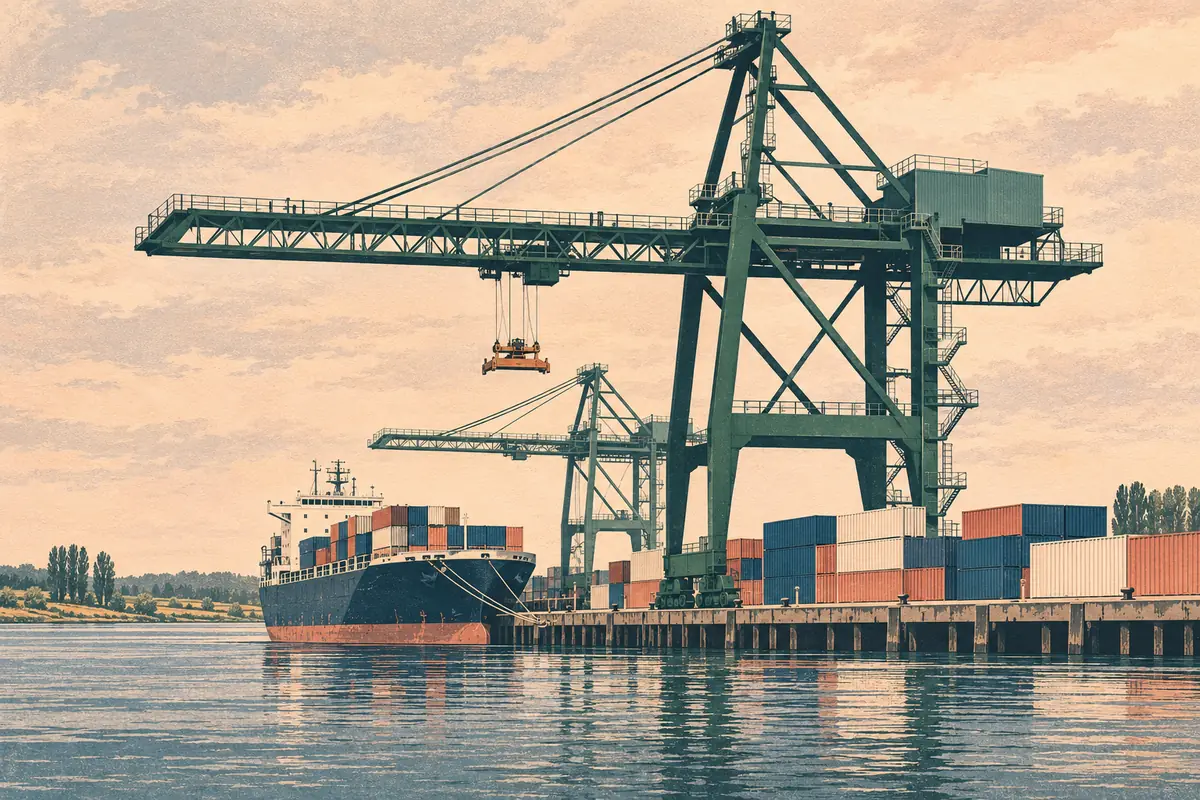
One of the most telling features of the Oregon Container Terminal is a bank of electrical outlets. The operator lists 620 places to plug in refrigerated containers. Perishable cargo needs power between the moment a crane lifts it from a ship and the moment a truck or train takes it away. That time on land is part of the voyage, too.
The terminal sits on North Marine Drive, where oceangoing ships, Columbia River barges, trucks and trains can exchange freight. Seven ship-to-shore cranes serve the waterfront. Eight tracks run into the terminal’s rail yard, connecting it with BNSF and Union Pacific. A box can leave Portland on a different kind of transport from the one that brought it in.
The operator behind those transfers changed this year. Harbor Industrial Services took over the container operation under a long-term lease with the Port of Portland beginning January 1. The Port’s 2026–27 budget explains an otherwise puzzling number. It projects a $23.1 million decline in marine operating revenue, citing the handover and a separate accounting change for utility revenue. Counting containers requires a different measure. That budget figure tells readers whose books the money passes through.
For the rhythm of a working day, the terminal operator publishes a vessel schedule and separate truck gate information. Those answer different questions for a shipper waiting on a box. A ship’s arrival is one date. When a truck can collect its cargo is another.
What we’re watching
Follow vessel calls on the operator’s schedule and compare actual marine revenue with the Port’s budget when accounts are published.